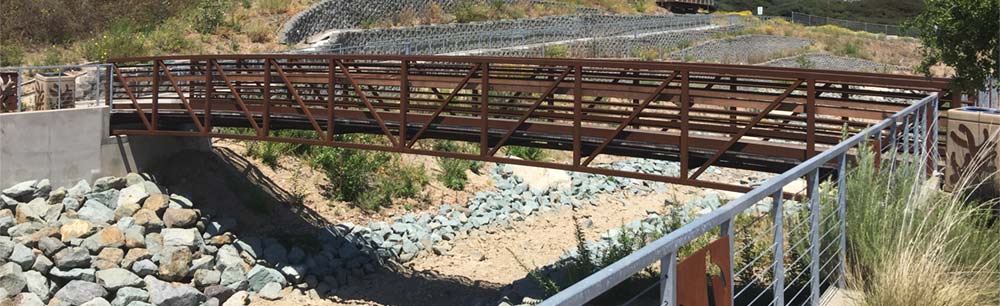
Steel truss bridges are an economical and aesthetic choice for vehicular and pedestrian bridge crossings. They are fabricated offsite and delivered in modular sections for a fast installation. SPECS works with engineers, architects, owners, agencies and contractors to provide estimating and design support in the early phase of a project through bid, fabrication and construction of the structure. Working with certified fabricators, SPECS offers the highest quality product coupled with knowledgeable, local technical support. Similarly, our knowledge of the local agencies and the variety of specifications applicable to vehicular and pedestrian truss superstructure design helps facilitate efficient submittal review and approval for your project.
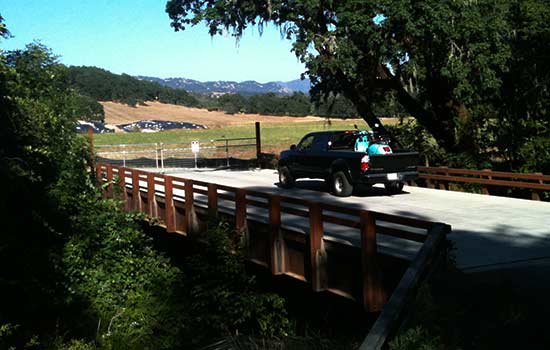
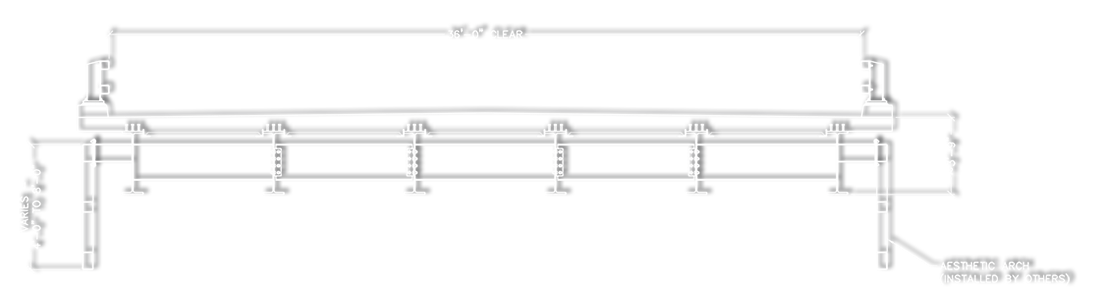
Steel I-Beams can be preassembled with deck sections to minimize construction time on site, making this type of bridge an economical choice. Beams are typically founded on cast-in-place concrete abutments, and the beams are sized and spaced based on the span, loading and lane configurations. Decking can be concrete, asphalt or wood. A variety of railing options is also available.
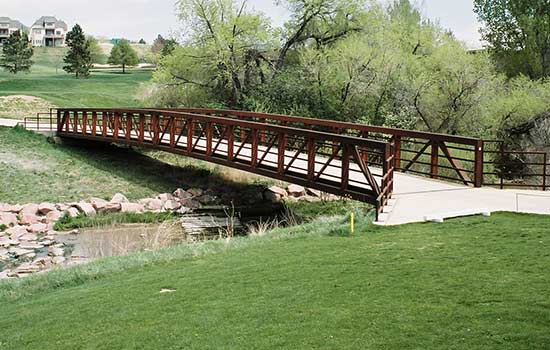
The Pratt style truss is the most efficient long-span option, capable of extending beyond 220’ in clear span.
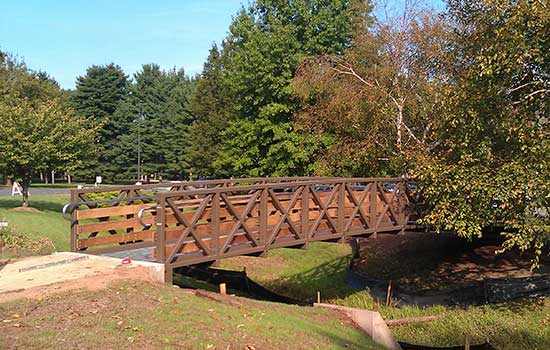
The Pratt style truss with a double diagonal cross brace offers fortified support for a leaner top and bottom chord.
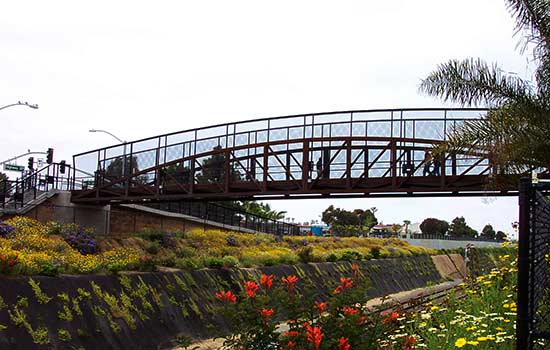
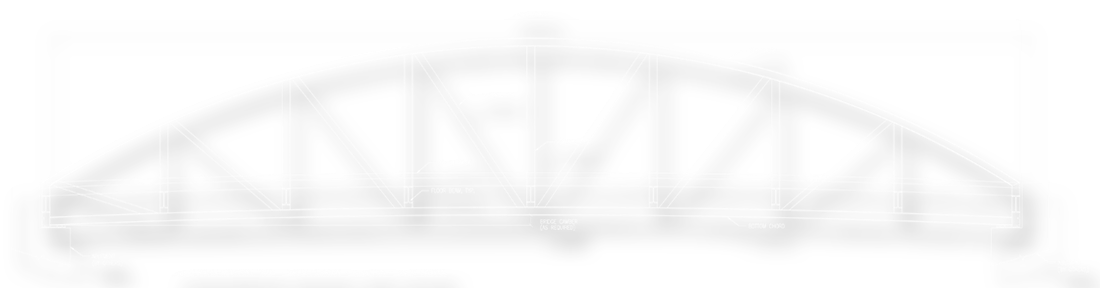
The Bowstring style has aesthetic appeal and can be designed with a true bow (as shown here, where the top and bottom chord meet) or a modified bow. Both options can feature a single- or double-diagonal cross brace design.
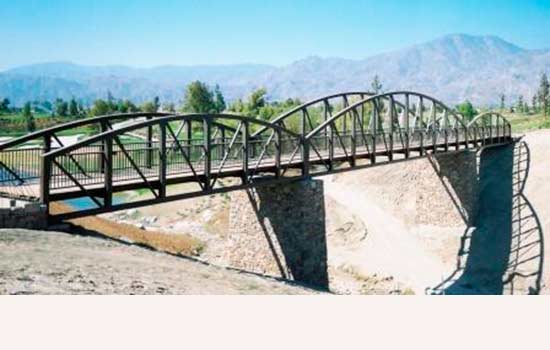
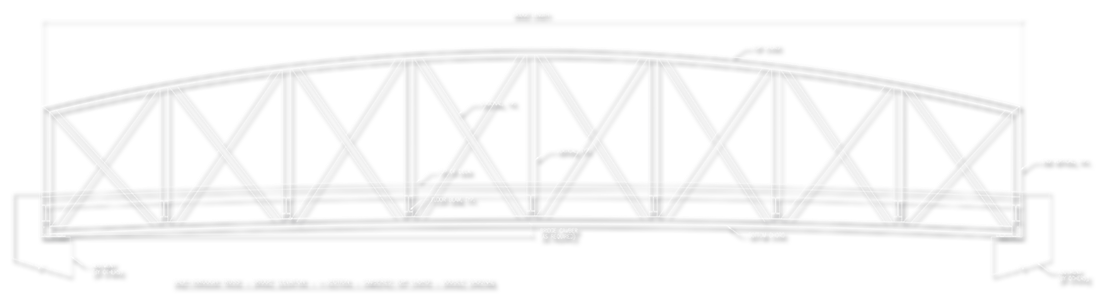
The Bowstring style has aesthetic appeal and can be designed with a modified bow (as shown here, where the top chord arcs toward the bottom chord and is connected by a vertical member at the end) or a true bow. Both options can feature a single- or double-diagonal cross brace design.
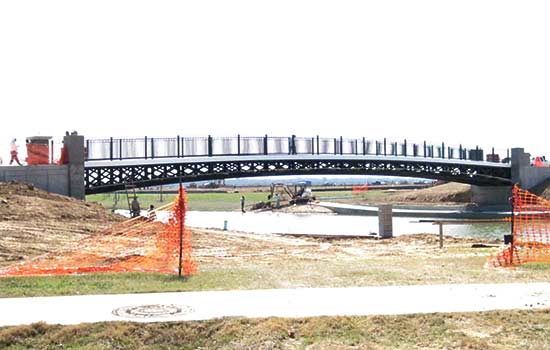
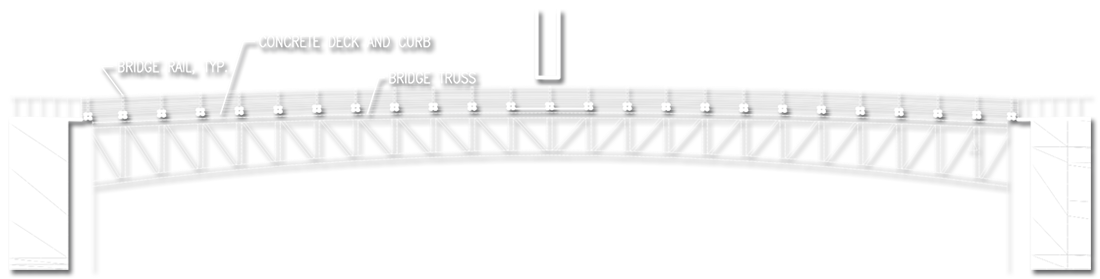
The underhung truss is an aesthetic option that features the truss below the road deck. This feature allows for clearer views from the bridge deck. Because the truss superstructure is below the roadway surface, this design relies on adequate clearance beneath the superstructure.
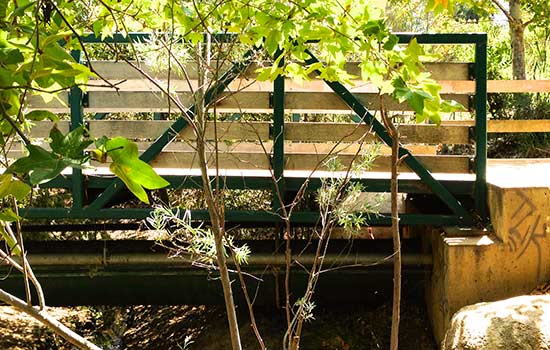
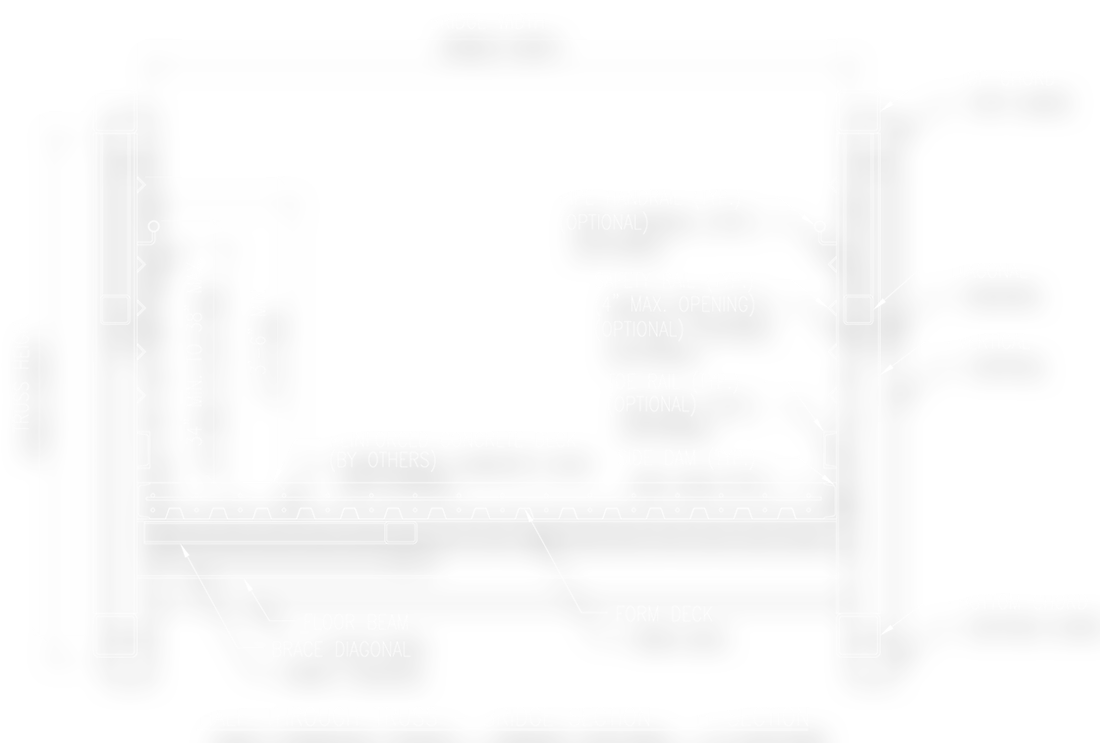
The “H” section features a deck that is tied between the trusses above the bottom chord. As the span dimension increases, the truss height also increases. A more centered placement of the deck between the trusses stabilizes the truss members, which leads to smaller steel members and a more efficient design. It also aids in reducing the visible truss height for pedestrians while on the bridge. Utilities can be attached to the underside of the deck, hiding them from view. The H-Section is an efficient design for longer spans and heavier loadings.
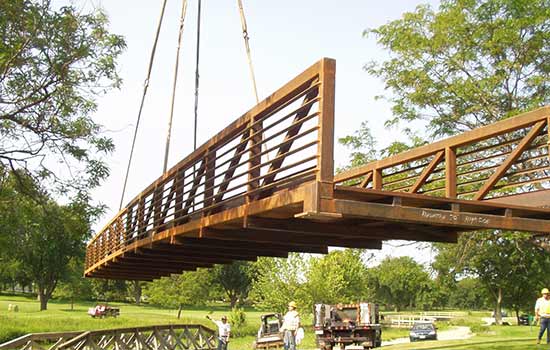
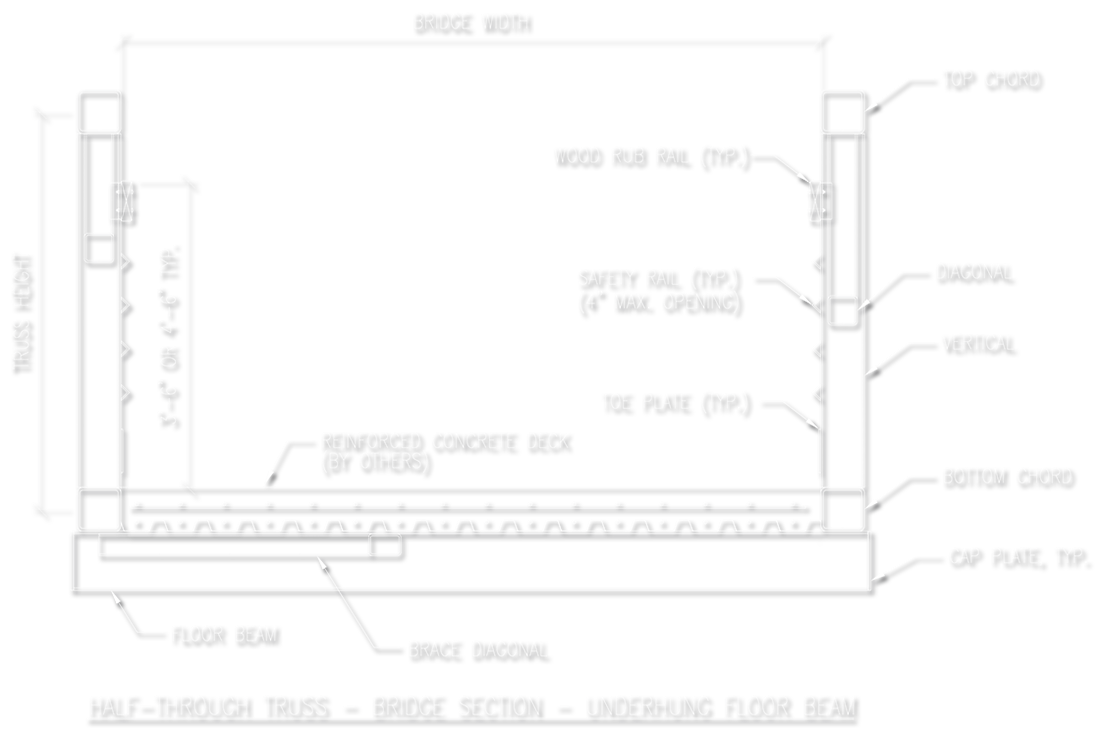
The “U” section features a deck that is level with the bottom chord. This configuration is typically selected when clearance beneath the structure is tight, because the top of deck to low steel dimension can be as shallow as 11” to 15”. As the span dimension increases, the truss height also increases, typically making this option feasible for spans under 100 feet.
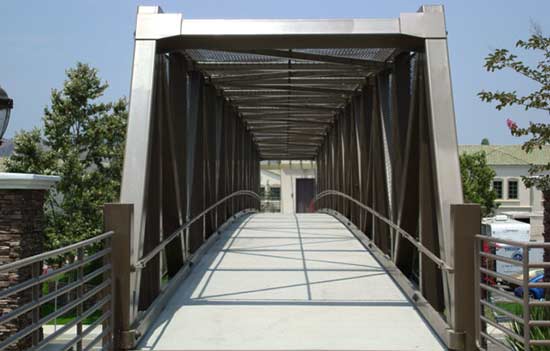
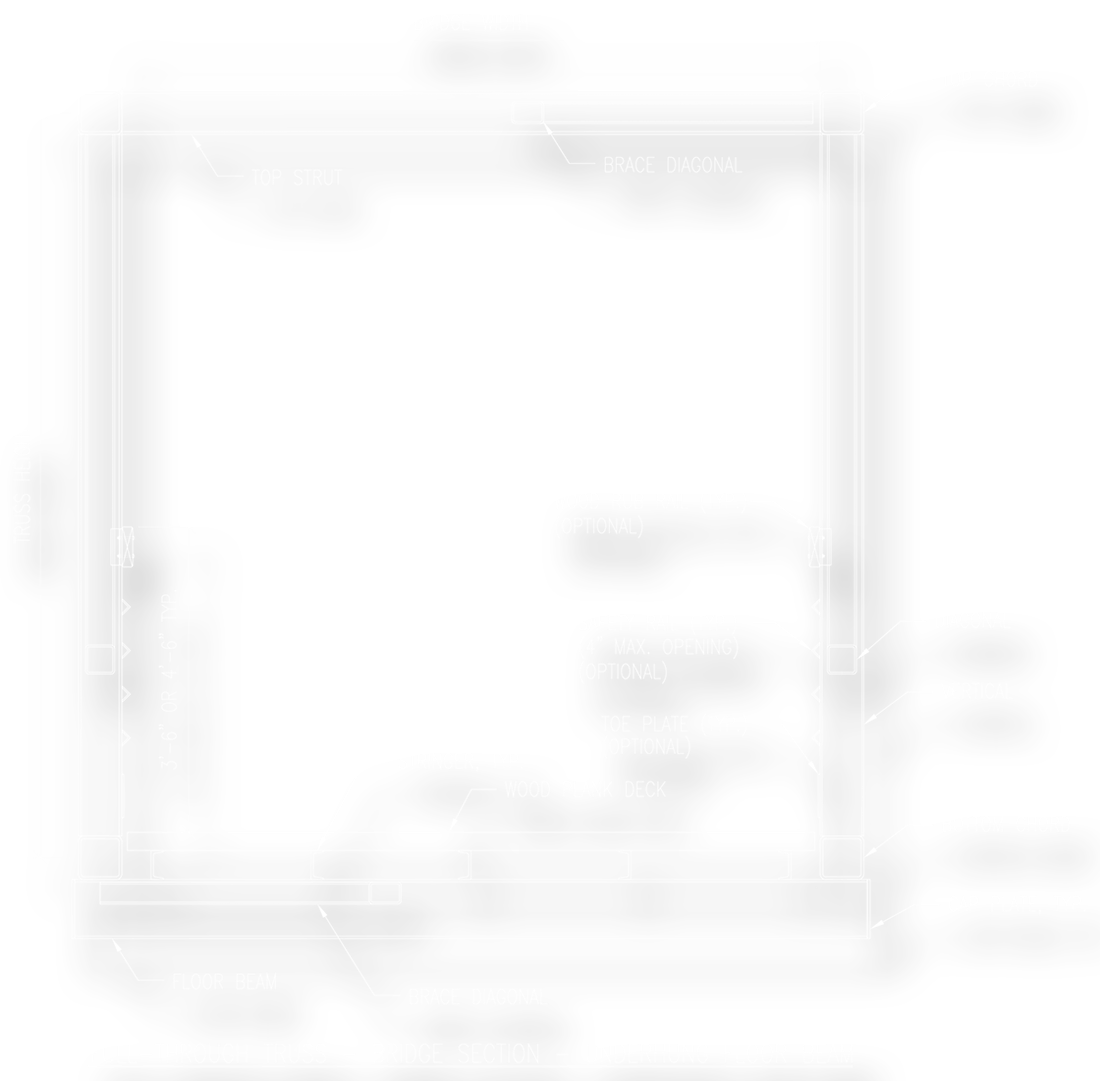
Box trusses feature the deck placement at the elevation of the bottom chord as well as a cross tie connecting the top chords. This configuration provides a great deal of stability between the trusses, which can reduce the top deck to low steel dimension for tight vertical profiles. It can also reduce the overall steel member size and facilitate longer spans.
In some applications, such as enclosed walkways, box trusses are enclosed with fencing, glazing or interior building materials and outfitted with lighting and HVAC to provide an enclosed, elevated corridor between two buildings.
